Short answer
What is promise-to-Pay Follow-ups?
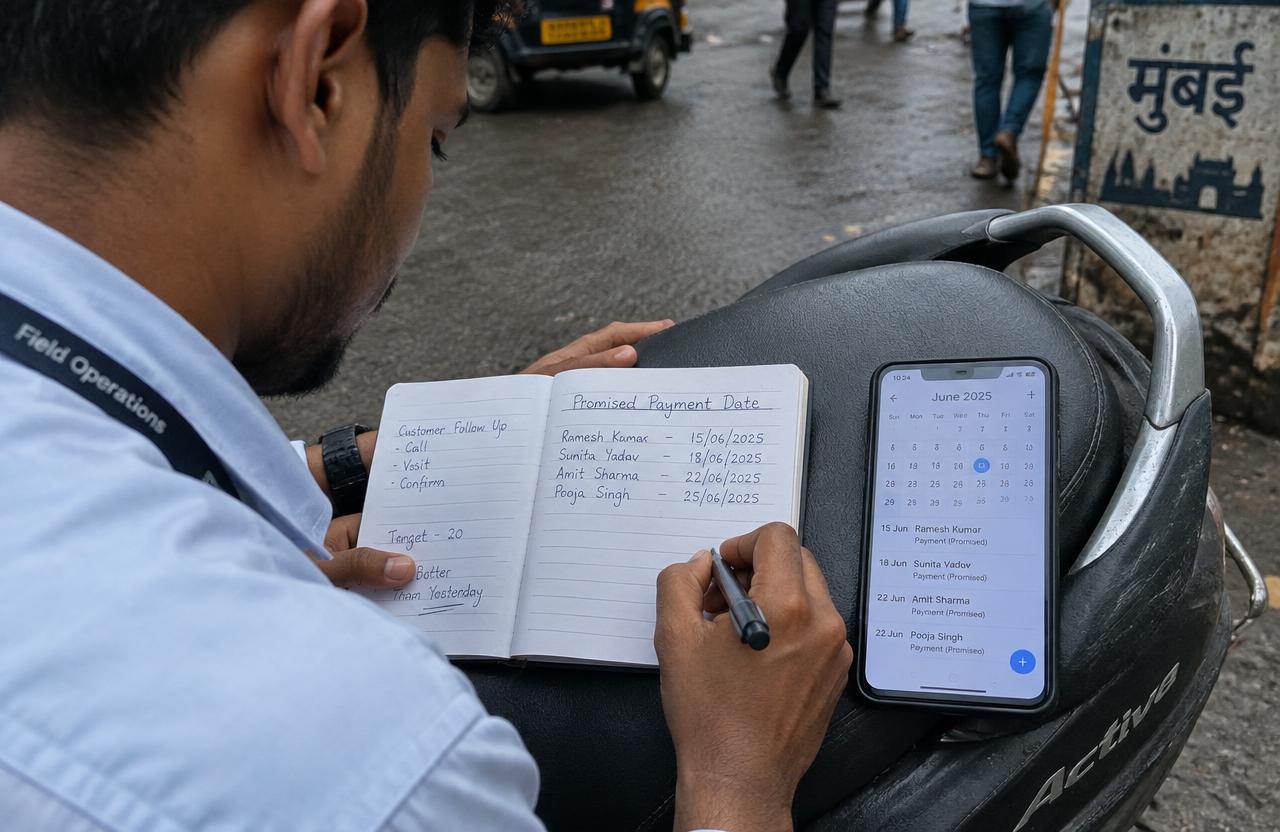
Promise-to-Pay Follow-ups is a field service in which a trained team recording repayment commitments and following up on them exactly as instructed. You share the locations and instructions; the team completes the visits, the evidence is reviewed, and you receive one consolidated report. Every collections visit is made only on the client's written authorisation, using the client's approved script and payment channels.
At a glance
- What this covers
- What the service is and how a visit runs
- Division
- Collections field support · Follow-ups
- Checklist points
- 5 standard checks
- Report outputs
- 4 deliverables
- Coverage
- Mumbai, Thane, Navi Mumbai, Panvel
- Read time
- 3 min
What you will learn
- Promise-to-Pay Follow-ups in simple terms — Recording repayment commitments and following up on them exactly as instructed
- What the field team checks — 5 points you can lift straight into your own brief
- What you receive — 4 points you can lift straight into your own brief
Promise-to-Pay Follow-ups in simple terms
Recording repayment commitments and following up on them exactly as instructed. It gives you independent, on-the-ground evidence instead of relying on self-reported updates from outlets, vendors or staff.
In Mumbai and its neighbouring cities, promise-to-Pay Follow-ups is usually run as a batch across many addresses, so route planning, consistent checklists and evidence review matter as much as the visit itself.
What the field team checks
- Promise amount and date recorded
- Reminder before due date
- Visit on the promised date
- Payment confirmed or broken
- New commitment captured
What you receive
- PTP tracker
- Kept / broken promise report
- Revised commitments
- Escalation list
How a visit is run
- Addresses are grouped into routes by area and travel time
- The field person works through the 5-point checklist on site
- The client's approved script is followed and the outcome is recorded as it happened
- Every photograph and answer carries the job ID and location ID
- A supervisor reviews the submission and queries anything unclear
- Visits that could not be completed are marked with a reason for a revisit decision
- Completed visits are consolidated into one report
What to share before the visits
- PTP list
- Client authorisation letter
- Approved script
When businesses use it
- Before paying a vendor, installer or agency
- After a campaign, installation or launch
- On a recurring schedule for compliance
- When an exception or complaint needs independent confirmation
Key takeaways
- Promise-to-Pay Follow-ups replaces self-reported updates with a visit record: 5 checklist points, photographs and one consolidated report.
- The checklist runs from promise amount and date recorded to new commitment captured, with evidence recorded against the points that decide the outcome.
- You receive 4 outputs: PTP tracker, Kept / broken promise report, Revised commitments, Escalation list.
- Visits are made only on your written authorisation, between 8:00 am and 7:00 pm, using your approved script and payment channels.
- Visits run across Mumbai City, the Western and Eastern Suburbs, Thane, Navi Mumbai and Panvel, and assignments typically start within one to three working days of a complete brief.
What to do next
If promise-to-Pay Follow-ups looks right for your situation, these are the three things a field team needs from you before the first visit.
Scope
Put the location list together
Full addresses with a pin code, and a contact name where you have one. PTP list is the first thing asked for.
Checklist
Fix the 5 points you want answered
Start from the list above — promise amount and date recorded — then add or delete points so nothing is left to a field person's interpretation.
Evidence
Say what proof you want back
PTP tracker is the standard output. Anything beyond that is easier to agree now than after the first batch.
Before you send it
Starting promise-to-pay follow-ups
Collections visits are made between 8:00 am and 7:00 pm, only on written client authorisation and through your approved channels.
Share a brief and location listFrequently asked questions
What is promise-to-Pay Follow-ups?
Promise-to-Pay Follow-ups is a field service in which a trained team recording repayment commitments and following up on them exactly as instructed. You share the locations and instructions; the team completes the visits, the evidence is reviewed, and you receive one consolidated report. Every collections visit is made only on the client's written authorisation, using the client's approved script and payment channels.
Which areas do you cover for promise-to-Pay Follow-ups?
Mumbai City, the Western and Eastern Suburbs, Thane, Navi Mumbai and Panvel, with local field teams in each area.
How fast can promise-to-Pay Follow-ups start?
Most assignments start within one to three working days of receiving a complete brief, depending on volume and spread.
What evidence will I receive?
PTP tracker and Kept / broken promise report, matched to a unique job and location ID.